

Shielded cable manufacturing
Shielded cables are transmission lines that use a metal mesh braid or wrap to encase the signal line. Wires and cables are primarily composed of three basic structural elements: a conductive core, insulation, and a sheath. Shielded cables essentially add a shielding layer to ordinary cables. Our Cable Extruder ensures high-quality production of these cables.
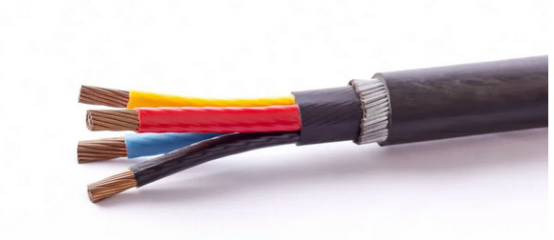
Its main purpose is to prevent electromagnetic interference (EMI) or radio frequency interference (RFI) to ensure stable signal transmission.
1. The role of the shielding layer
The shielding layer of shielded cables plays an important role in resisting electromagnetic interference during signal and power transmission. The design and material selection of the shielding layer can effectively prevent external electromagnetic fields from interfering with signal transmission and suppress the radiation of the cable itself. The specific functions are as follows:
Preventing external electromagnetic interference (EMI): In industrial, communications, and power systems, equipment generates a large amount of electromagnetic waves during operation. This electromagnetic interference (EMI) can affect data transmission in signal lines. Shielding can block interference from external electromagnetic waves, maintaining signal stability and integrity. Advanced cable extrusion machines are used to manufacture these cables with precise shielding.
Suppress the radiation of internal signals: The shielding layer not only prevents external interference from entering the cable, but also suppresses the radiation of internal signals in the cable, preventing internal signals from interfering with surrounding equipment or other cables. Especially in complex cable laying environments, the shielding layer effectively reduces cross interference. High-quality cable extruder machines ensure consistent shielding coverage.
Improve signal quality: For cables transmitting high-frequency signals, the shielding layer can effectively reduce signal distortion and attenuation caused by external noise interference, thereby improving signal quality and transmission efficiency. This is achieved using advanced extruder machine screws in the production process.
Anti-static protection: The shielding layer can also act as an electrostatic shield, preventing electric shock or sparks caused by static electricity accumulation during cable laying and use, thereby improving the safety of the cable.
2. Shielding layer material
The shield layer of a shielded cable is made of non-magnetic materials such as copper and aluminum. Its thickness is thin, far less than the skin depth of the metal material. Different shielding performance requirements are met in different applications, and different materials are used. These include copper wire braided shield, copper tape wrapped shield, copper wire spiral shield, aluminum alloy wire braided shield, copper-clad aluminum wire braided shield, and aluminum-plastic composite tape wrapped shield.
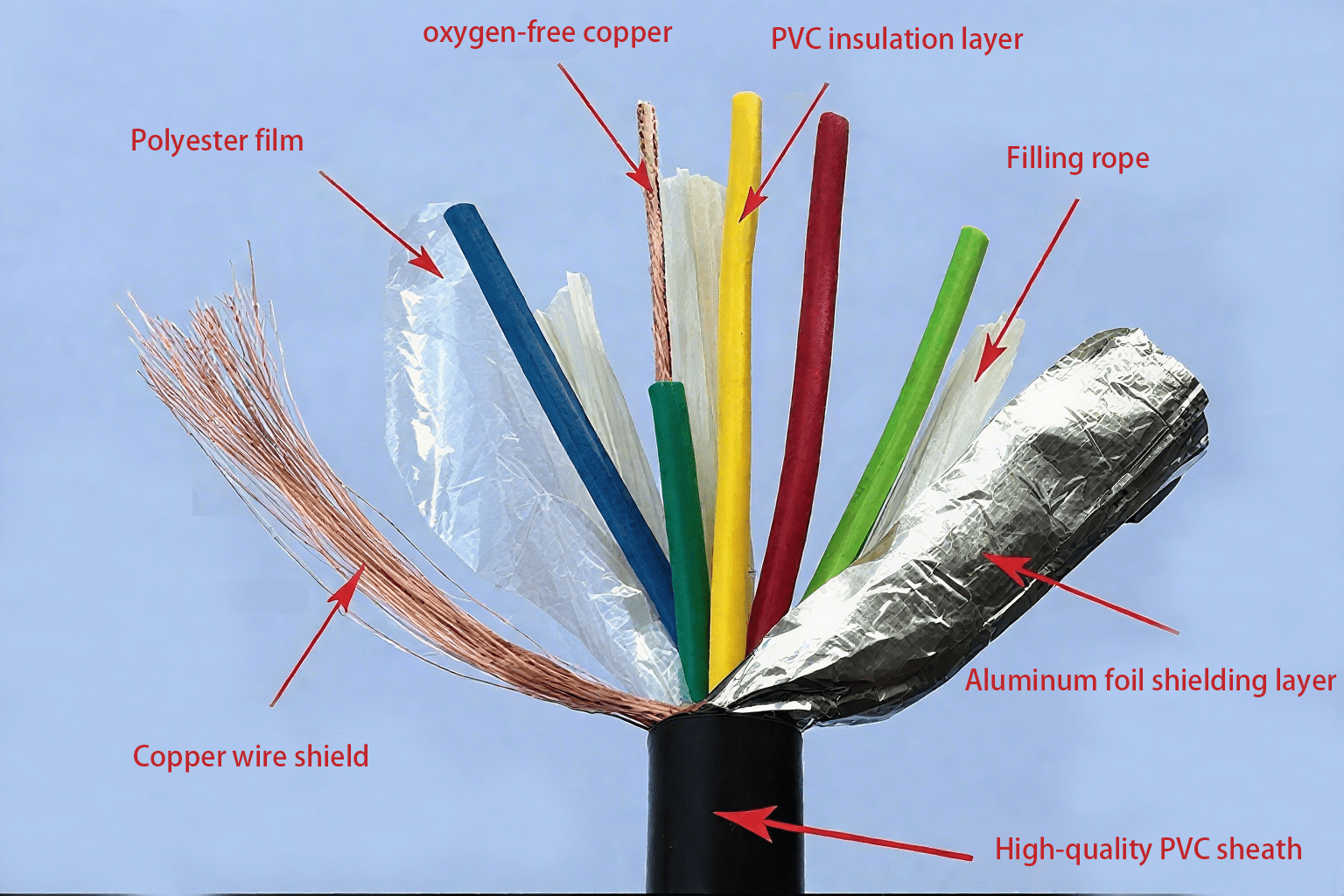
Internal structure of winding machine products:
Metal braided mesh shielding: This braided mesh provides good mechanical flexibility and electromagnetic shielding effect, suitable for occasions that require frequent movement, and is widely used in flexible cables and industrial control cables produced by plastic extrusion machines.
Aluminum Foil/Polyester Film Shielding: Aluminum foil shielding provides strong shielding against electromagnetic interference from high-frequency signals. Due to its compact structure, it can form a complete shield and is often used in communication cables or data cables that require high signal integrity.
Tinned Copper Braided Shield: Tinned copper braided shielding offers high corrosion resistance and durability, making it suitable for use in wet or corrosive environments. It also offers good electrical conductivity and is commonly used in industrial and power systems requiring high immunity to interference.
Aluminum foil + woven mesh composite shielding: This composite shielding structure can protect against both low-frequency and high-frequency interference, combining the advantages of aluminum foil and woven mesh. It is often used in environments with particularly severe electromagnetic interference, such as radio and television transmission, industrial automation and precision instrument systems.
Conductive shielding layer: These materials have certain flexibility and conductivity, and are mainly used in special cables with high mechanical performance requirements, such as high-precision cables in the aerospace and military fields.
Grounding method of shielded cable
The shield's primary effect isn't due to the metal's inherent reflection or absorption of electric and magnetic fields, but rather to the shield's grounding. Different grounding methods directly affect the shield's effectiveness. Shield grounding is typically implemented in two ways: single-ended grounding and double-ended grounding.
Single-ended grounding of the shield layer:
The shield layer needs to be connected to a ground point to effectively exclude interference signals. Typically, the shield layer is grounded at only one end, a method known as "single-ended grounding." This effectively prevents ground loops and reduces interference.
Double-end grounding of the shield layer:
In high-frequency signals or high-noise environments, it's sometimes helpful to ground both ends of the shield. This helps improve interference immunity, but it can sometimes cause ground loops. The choice depends on the specific application scenario.
Shielded cables should not be grounded at multiple points, as potential differences between the different grounding points can cause interference. If grounded at multiple points, shield currents can be induced into the conductors, interfering with the signal lines. This is especially true in applications with multiple inverters, where high-order harmonic interference is more pronounced, requiring special attention.
Application of shielded cables
Currently, shielded wires and cables are widely used in various industries. Some are used in fixed places with strong wire interference, such as indoors and shopping malls; others are used in places with explosive hazards, such as mining, gas, and petrochemical projects.
Common applications for shielded cables:
Industrial automation and control systems: In factories or automated production lines, many devices operate simultaneously, generating strong electromagnetic interference. Shielded cables ensure accurate transmission of control signals and prevent interference. These cables are manufactured efficiently using cable extruder machines.
Data transmission: For network cables, USB cables, audio and video cables, etc., the shielding layer prevents data from being interfered with during transmission, ensuring high-quality signal transmission.
Power industry: Shielded cables are used in high-voltage power equipment to reduce electromagnetic interference and ensure the normal operation of power equipment.
Communication systems: In applications such as broadcasting and satellite communications, cable extruder machine shielded cables can reduce interference and signal loss.
Medical equipment: Some high-precision medical equipment is very sensitive to electromagnetic interference, and shielded cables ensure the normal operation of these devices.
The following equipment are developed and designed by us for shielding. Different equipment adopts different shielding methods. Please consult our staff for details.